

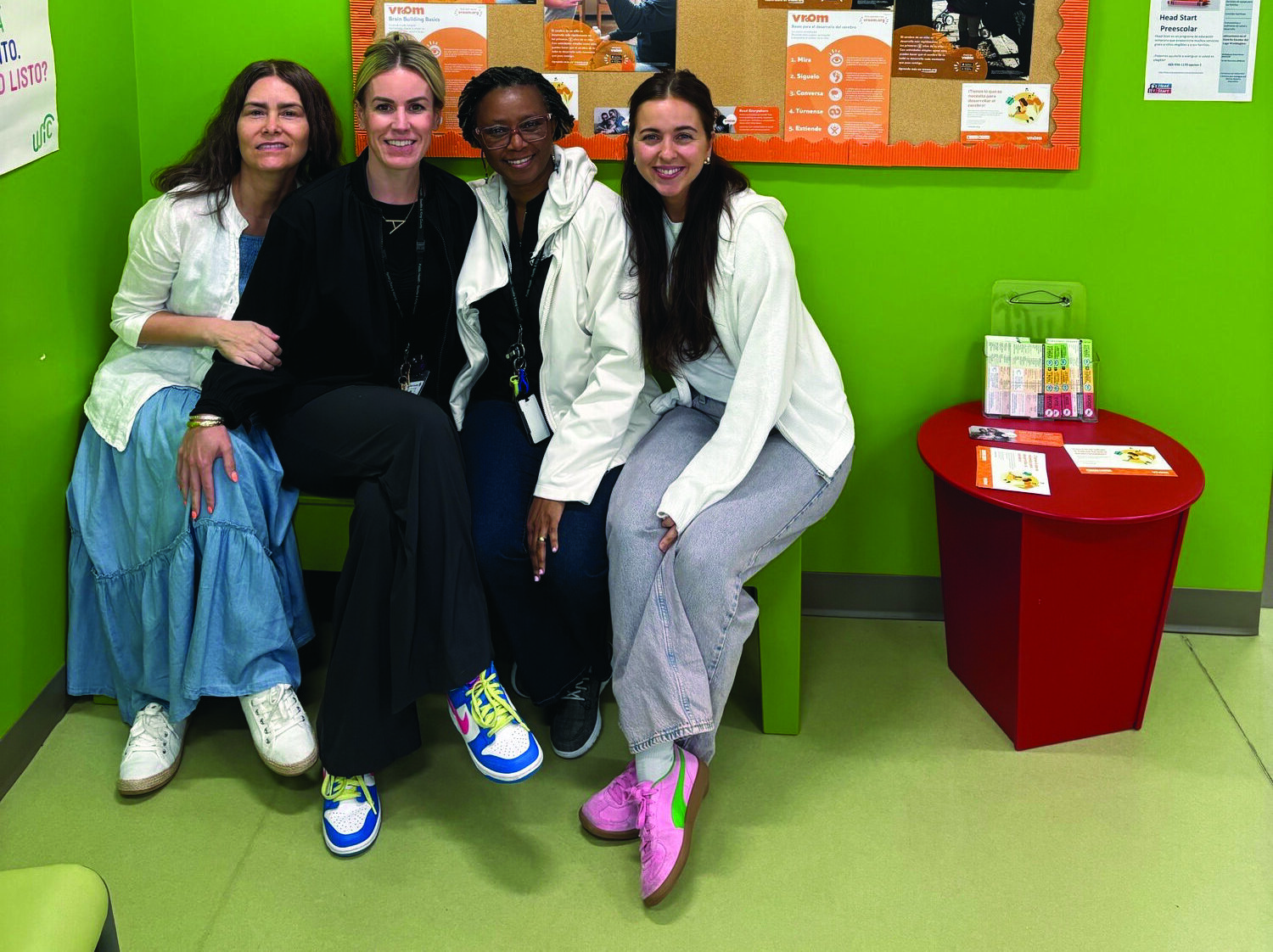
For parents, newborns, and children under age five in King County, the Women, Infants, and Children (WIC) program is a lifeline. Throughout the county, this program provides food benefits and nutrition eductation to low-income community members. The North Regional Team, led by PROTEC17 member, Dietician, and WIC Coordinator Holly Krawiec, alongside Nutrition Assistants April Arend, Amanda Hanstad, Jane Karumba, and Carmen Palacios, are the friendly faces that WIC clients see when they arrive at their King County Public Health clinic.
“I let clients know they are in the right place and they’re not alone; I encourage them and check on how their children are doing,” explains Karumba, a former WIC participant, now Nutrition Assistant. “I know firsthand they are faced with so many challenges.”
Karumba credits the WIC resources and support she received when her children were young for enabling her to obtain a degree from the University of Washington, then return to work in the program. She uses her experience as a former client to connect with WIC families.
The WIC program has been in place since 1972 when federal legislation was passed as an amendment to the Child Nutrition Act. For over 50 years, eligible clients receive benefits such as vouchers for nutritious food and formula, nutritional education, and breast/chest pumps. WIC staff screen clients for eligibility, counsel them on the benefits of breast and chest feeding, and also connect clients with other services when needed.
Palacios, a Nutrition Assistant for over 25 years, joined as a staff member after participating in the program, too. She has shared the nutrition education she received as a WIC participant all those years ago with countless clients. Palacios also works with Spanish-speaking clients in their own language.
For Hanstad, the program is a form of preventative care that provides security to families. Many clients have reported to her that they don’t know what they would do without WIC.
Before the pandemic, the services that WIC staff provided were entirely in person. During the early pandemic, services transitioned to entirely virtual appointments. In 2022, when clients had the option of choosing between virtual or in-person services thanks to a remote provision in federal legislation, 99 percent of WIC clients within the North Regional Team chose virtual appointments.
Given the barriers to actually getting to a clinic – including work and child care schedules, as well as transportation issues – it is not surprising that most clients choose virtual services. Not only are virtual services more beneficial for clients, but they are allowing clinic workers to reach more people. Yet, King County was unreasonably denying staff the ability to telework one to two days per week – even on days when clinics are closed to the public and all appointments are virtual.
After bringing this issue forward through the grievance process, PROTEC17 staff and members recently won an arbitration in June that will allow the team to telework on days that clinics are closed, as well as during inclement weather. The WIC team is grateful that they will be able to continue to work with their clients remotely so that these valuable services can be accessed by all.