

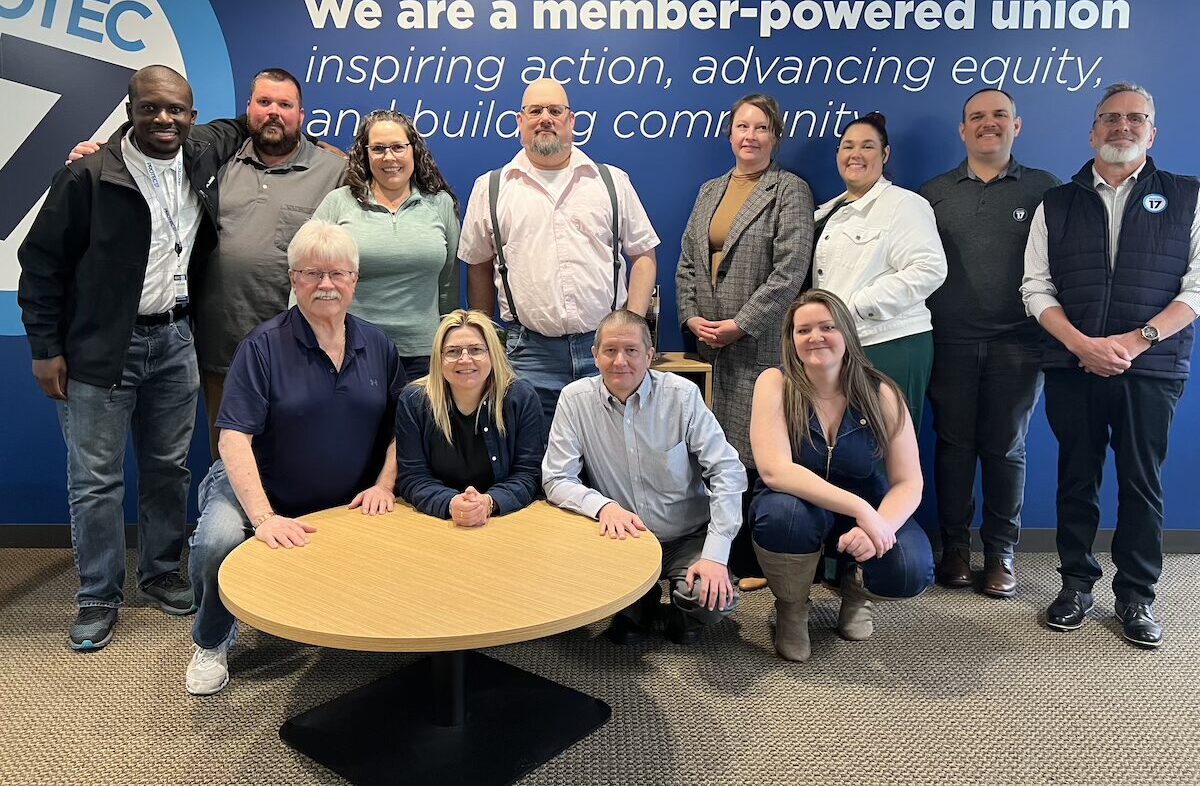
Negotiations for the 2027-2029 contract with the State of Washington began in April and will continue through the summer in order to reach a deal by the state-mandated October 1 deadline to be included in the Governor’s budget.
The bargaining team is comprised of PROTEC17 members who represent their Washington State Department of Transportation (WSDOT), Department of Licensing (DOL), and the Washington State Patrol (WSP) colleagues from across the state. These PROTEC17 member-leaders act as subject matter experts for their respective agencies, provide invaluable insight, and play an integral role in ensuring their coworkers’ interests are represented at the negotiating table. They also sacrifice many hours of their personal time to prepare and present proposals identified as priorities in our statewide member survey.
While the time committment and the process can be taxing in many ways, bargaining team members often report that the experience of negotiating the contract is enlightening and fulfilling, and they enjoy helping to ensure the State is a good place to work.
Brandi Wilkins, WSDOT Engineer and first-time member of the bargaining team said: “I really enjoy the work I do at WSDOT for the communities we serve, but workers’ voices are not always heard in a meaningful way when important decisions are made. By participating in this process, I feel like I’m making a real difference for myself and my colleagues and the important work that we do.”
WSP Communications Officer and bargaining team member Rachel Crittenden is motivated by her fellow 911 operators: “We do a lot of heavy lifting to make sure Troopers, DOT workers, and others are able to safely do their jobs every day, while also being left behind where pay and benefits are concerned. I wanted to do my part to make sure Communications Officers are fairly compensated for their hard work.”
Paul Austin, WSP Commercial Vehicle Enforcement Officer initially got involved to ensure the voices of his colleagues were heard, and is now serving on the team for a third time. He said: “I know I’ve really made a difference for myself and my colleagues through this process.”
Joining the team for the second time is Licensing Services Representative Jason Clutter, who said: “everyone sacrificing the perks of private employment to perform State service deserves the best working conditions we can give them!”
As a union member for over 30 years, Annette Dinkel started attending the monthly Chapter meetings at WSDOT because she wanted to learn more about the contract and what members could do to improve it.
“Being on the negotiating team opened my eyes to how our state and agencies operate, and motivated me to continue providing input to help change rules, codes, and legislation that can make being a state employee more challenging and less rewarding,” said Dinkell. “I also want to better our union community and our support for each other,” she continued.
For Transportation Planner and self-described “proud PROTEC17 member” Brian Brannies, serving on the bargaining team is one of the most rewarding things he’s done in his tenure at WSDOT.
“I’ve always been impressed by how much our union is able to deliver for the small amount of dues that we pay. I didn’t realize until I got involved in bargaining exactly how much labor and service that truly is! I want to do my part to continue to advocate for our members, and move our union and agencies forward.”
So far, the PROTEC17 team has presented many proposals, from improvements to rest periods at WSP and the permanent incorporation of plexiglass barriers at the DOL, to stronger telework language, the establishment of a new type of unpaid sick leave, and stronger rights and protections for immigrants in the workplace – to name a few. Once the State’s economic forecast is released in late June, the team will begin focusing on wage adjustments. State members should check their personal email for details on the proposals and the latest updates, or reach out to a member of the bargaining team.